
1. Introduction
From food industries and agroforestry 5 billion tons of biomass residues are estimated worldwide and represent an emission for 3.3 billion tonnes of carbon dioxide each year. Sawdust, barks, leaves, cones, branches, seeds, chips and resins represent wood biomass by-products (Ferreira-Santos et al., 2020). These by-products are used as a fuel, insulation material, waste-based biosorbents for the removal of a wide range of water pollutants, filler in biogenic plastics and a building block for further processing. Next, by-products generated during mushroom production and processing have been utilized as animal feed, fertilizer, cosmeceuticals, bio-based materials for bioremediation and energy production (Antunes et al., 2020). These approaches address the circular economy aspect to use residual material as a novel product. Even so, when observing the composition of wood biomass by-products and the residues of economically important medicinal mushrooms (MMR), it can be seen that selected by-products have a higher content of extractives, which makes this material suitable for the extraction of bioactive compounds (Häsler Gunnarsdottir et al., 2023). Moreover, agri-food by-products (AFP) have the potential to be transformed into edible ingredients that supply dietary fiber and phytochemicals. In previous publications, it has been shown that wood fragments used in Balkan cooperage (WBC) (Veljović et al., 2017; Smailagić et al., 2019) and MMR (Veljović et al., 2023) could be recognized as unusual and overlooked valuable sources of dietary phenolic compounds. Myrobalan plum (Prunus cerasifera), black locust (Robinia pseudoacacia), cherry (Prunus avium) and mulberry (Morus alba) WBC contain protocatechuic acid, p-hydroxybenzoic acid, apigenin, and pinocembrin. Additionally, ellagic acid was predominant in myrobalan plum and black locust, while taxifolin was predominant in cherry and mulberry (Veljović et al., 2017). Medicinal mushrooms also represent a valuable source of pharmaceutically important substances with a diverse chemical structure and pronounced bioactivity. Non-edible mushrooms characterized by a coarse texture and therapeutic properties are classified as medicinal mushrooms. Phellinus linteus, commonly known as black hoof mushroom, is a wood decay fungus that can grow on Morus alba. Numerous studies confirm that Phellinus linteus and Phellinus igniarius (willow bracket mushroom) contain a wide range of bioactive secondary metabolites, with polysaccharides and phenolic compounds being dominant and showing an absence of toxic compounds (Yang et al., 2016; Thanh et al., 2018; Dimitrova-Shumkovska et al., 2022). Caffeic acid, ellagic acid, p-coumaric acid, trans-cinnamic acid, hispidin and fumaric acid (Chen et al., 2019; Çayan et al., 2021; Abdelshafy et al., 2022) have been identified in Phellinus species including P. linteus and P. igniarius. Besides providing valuable compounds, AFP are recognized for their ability to improve water-holding capacity, gel-forming properties and syneresis rates. The application of processed AFP along with probiotics is an appropriate approach to confer functional attributes to food products. Yogurt enriched with AFP can serve as a probiotic carrier, and represents an affordable food, available in many varieties and flavors tailored to individual preferences (Borys et al., 2021; Jovanović et al., 2023). Moreover, phenolic compounds may be considered novel second-generation prebiotics (Rodríguez-Daza et al., 2021). As a beverage ingredient, Phellinus species are used in the preparation of coffee, milk-based beverages, alcoholic drinks, and yogurt (Dimitrova-Shumkovska et al., 2022; Yang et al., 2025). Additionally, bark bands are used to wrap cheeses during ripening, bark powder is added to cheeses to enhance sensory qualities, and wood casks are valued for improving the flavor of spirits (Aparnna et al., 2024). Only a limited number of studies have focused on the incorporation of wood fragments and medicinal mushrooms into yogurt (Table 1). Research on yogurts enriched with their by-products, WBC and MMR, is even more scarce. Moreover, most available data is based on laboratory-scale experiments and developed products have yet to reach the European market.
Table 1. Ingredients based on bark, wood fragments and mushrooms used for yogurt supplementation.
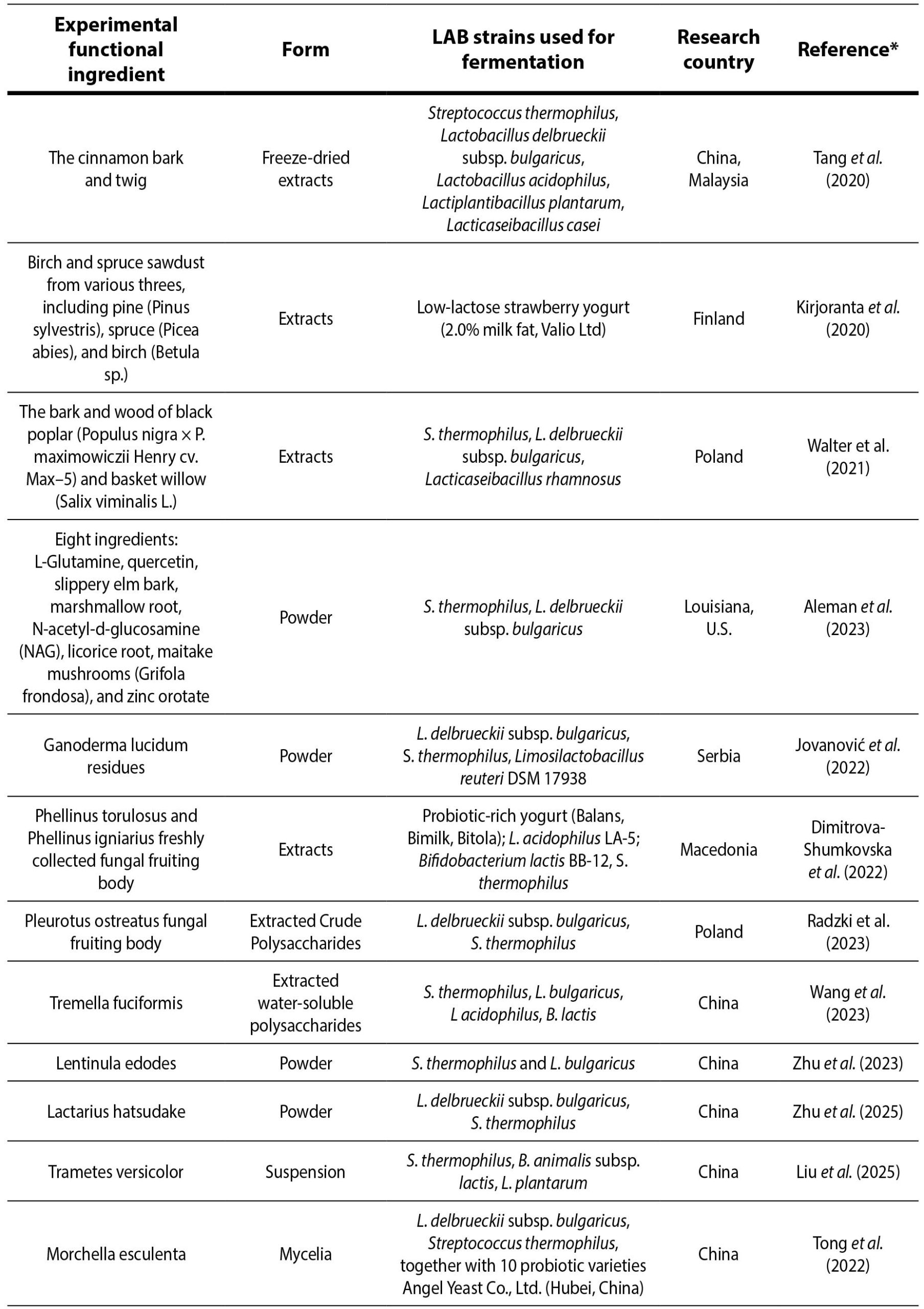
* The selected studies are original scientific articles published in the last five years (between 2020 and 2025)
It is noteworthy that, recent research has focused on the sustainable utilization of AFP, including their bioactivity, safety for consumption and sensory acceptance, reflecting increasing public awareness of nutrition and environmental sustainability. The aim of this study was to evaluate the functionality of freshly prepared yogurts supplemented with selected AFP, MMR and WBC. Fermentation dynamics, syneresis rate and influence on viability of lactic acid bacteria were analyzed.
2.1. Materials and Methods
2.1. Materials
Wood samples from Balkan cooperage (WBC) were obtained from the cooperage industry VBX-SRL.D.O.O. from Kraljevo, Central Serbia. Post-extraction solid residues, from medicinal mushrooms (MMR), were obtained from Jingsu Alphay Bio-Tech, Co. Ltd. (PR China).
Figure 1. Fermentation kinetics.
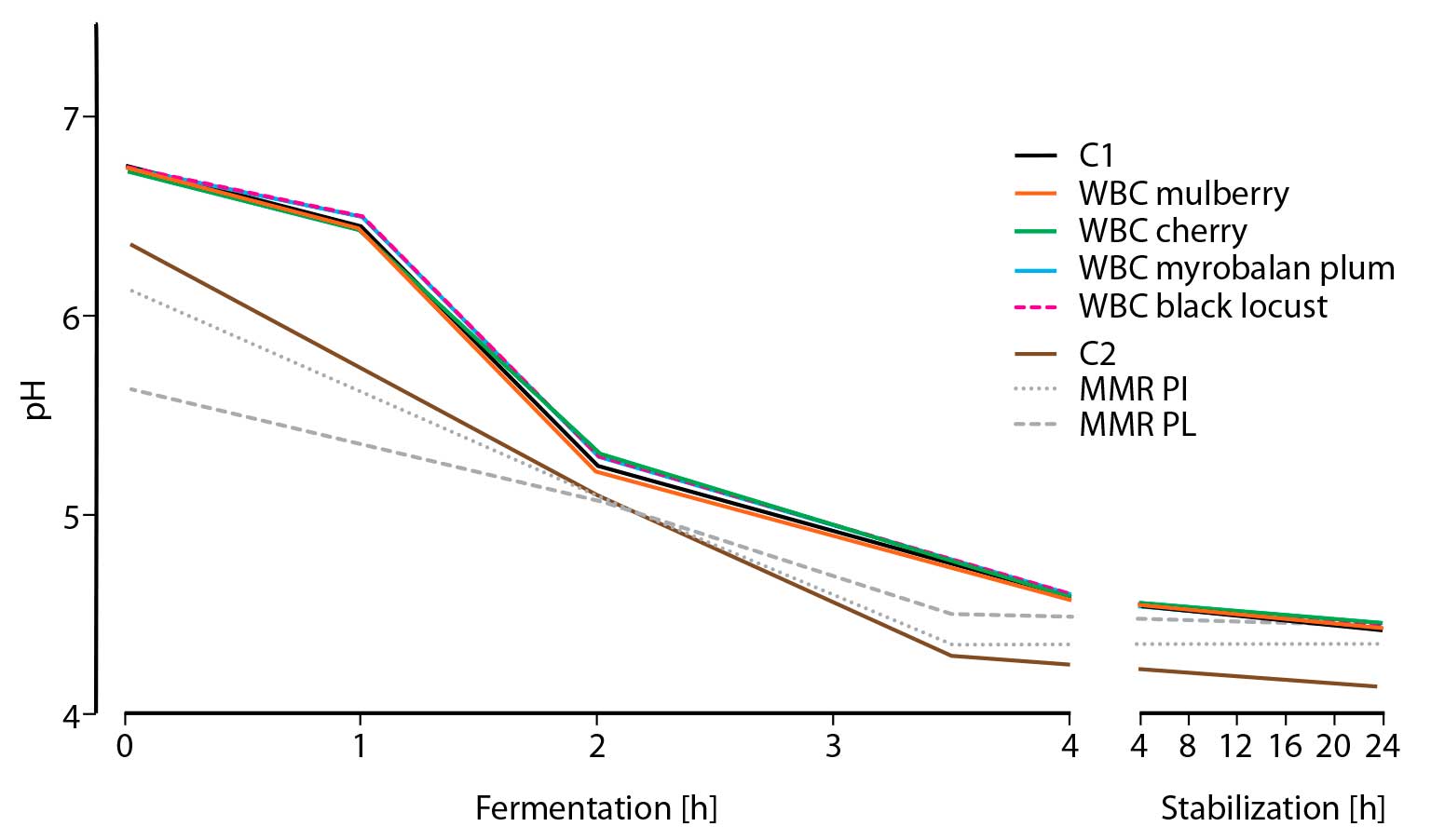
*C1-control yogurt fermented with S. thermophilus and L. bulgaricus.; C2- control yogurt fermented with S. thermophilus, L. bulgaricus and L. reuteri.
Pasteurized cow milk, 2.8% milk fat, were obtained from the local market. YC-X11 lyophilized starter culture containing Lactobacillus delbrueckii subsp. bulgaricus and Streptococcus thermophilus was purchased from Chr. Hansen (Hørsholm, Denmark). Limosilactobacillus reuteri DSM 17938 strain was obtained from the Culture Collection of the Department of Microbiology, University of Belgrade, Faculty of Biology, Belgrade, Serbia. De Man-Rogosa-Sharpe broth (MRS broth) and MRS agar were obtained from Torlak (Belgrade, Serbia). Phosphate buffered saline (PBS) was purchased from Sigma-Aldrich (Steinheim, Germany).
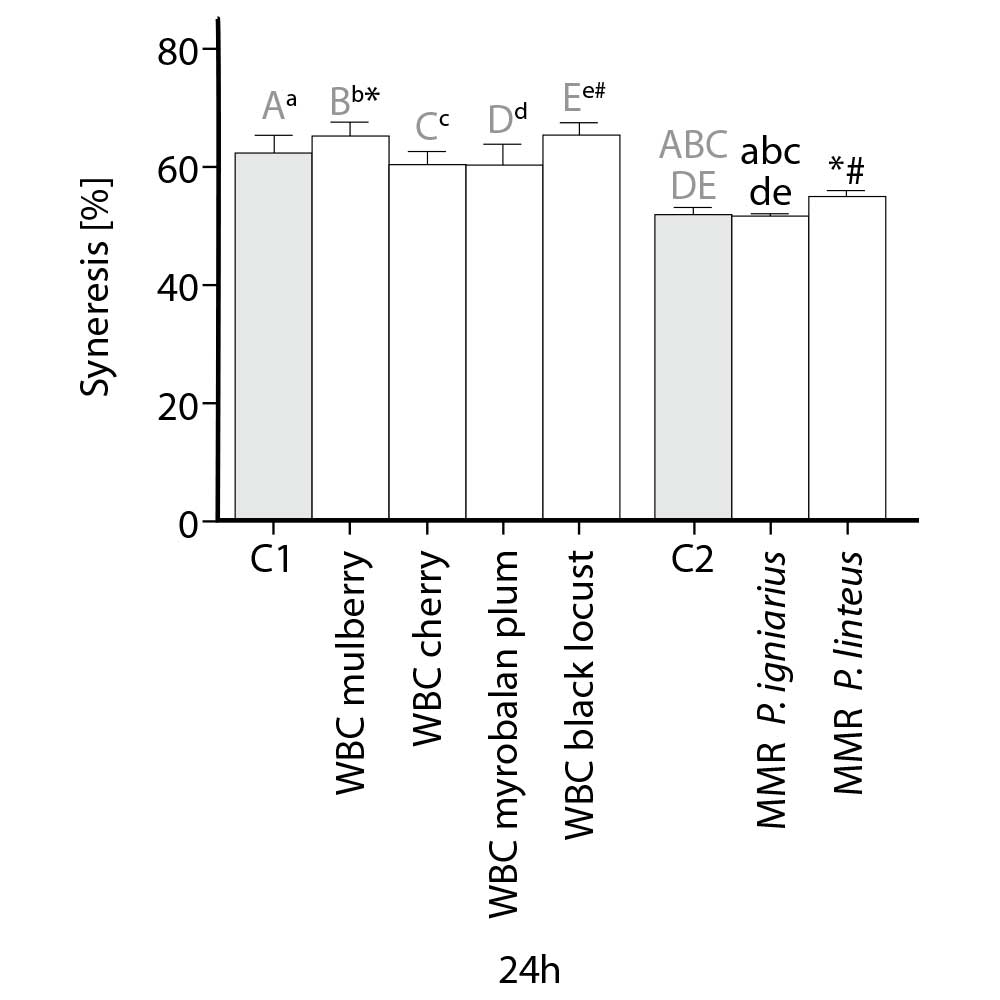
Figure 2. Syneresis rates. ABCDEabcde*# significant difference in means between all samples and controls, according to the Tukey’s multiple comparison test. Bars with the same mark are significantly different in comparison to each other (p<0.05). Exact p value: A p=0.0062; a p=0.0099;B p=0.001; b p=0.0017; * p=0.01;C p=0.0198; c p=0.0294; D p=0.0241; d p=0.0353;E p=0.001; e p=0.0017; # p=0.01.
2.2. Sample preparation
Processing agricultural residues, WBC and MMR were conducted as reported earlier (Smailagić et al., 2019; Veljović et al., 2023). Regarding WBC, the staves were ground in a wood mill, and the granulation of the obtained sawdust ranged from 0.5–1.5 mm. The sawdust was sterilized by dry heat treatment in a thermal oven (70° C, 30 minutes).
Neat starter cultures and WBC (2%), and MMR (4%) were used to prepare control and supplement yogurt, respectively. WBC and MMR concentration were selected based on a literature search and prior research experience with similar by-products. Cow´s milk (2.8% milk fat) was heat-treated at 85 °C for 10 min, cooled to 43°C, and poured into 100 mL glass containers. Subsequently, neat starter culture (0.02 g, initial counts of log 10.7 CFU/g) or WBC (2% w/w) and MMR (4% w/w) were added. After thorough mixing, the samples were subjected to fermentation at 43 °C until a pH < 4.6 was reached. The obtained yogurts were stirred and stabilized by cooling (4 °C for 24 h).
Table 2. Probiotic strains viability
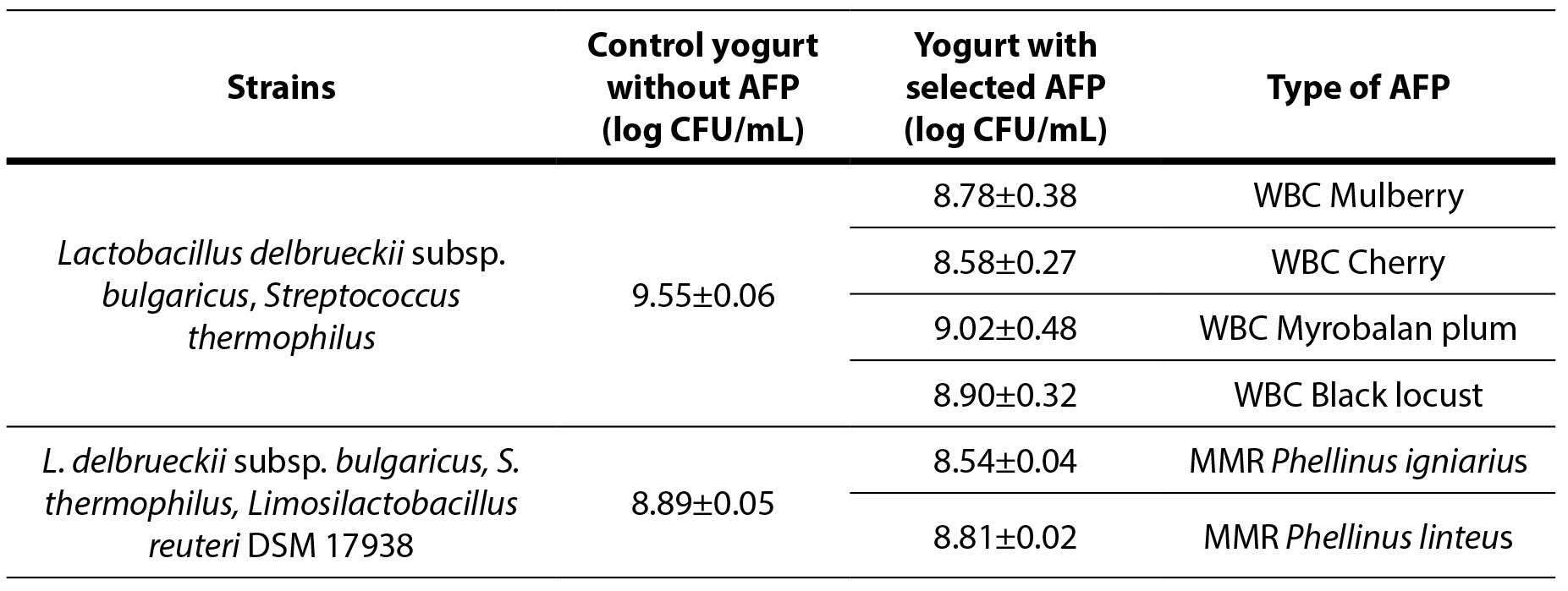
AFP-Agri-food by-products; WBC-wood fragments used in Balkan cooperage; MMR- medicinal mushroom residues; Amount of selected by-products powder for all WBC samples is 2% while for P. igniarius and P. linteus residues is (4%).
2.3. Viability of Probiotic Bacteria
Yogurt samples with and without AFP were analyzed as described earlier (Jovanović et al., 2022). Viability of probiotic bacteria was estimated using the pour plate technique and serial dilutions in phosphate buffer saline (1% PBS). LAB were enumerated using MRS agar after incubation at 37°C until colony development. Two independent experiments were performed in triplicate. The results were expressed as the logarithm of the mean number of the colony-forming units (log CFU/mL).
2.4. Dynamics of fermentation and syneresis rates
Fermentation kinetics were evaluated by measuring the pH changes at 1h intervals during yogurt fermentation until a pH of 4.6 was reached and after stabilization (cold storage at 4° C, 24 h). The pH value was determined at approximately 10° C using a pH meter with a gel-filled electrode (WTW™ SenTix™ 41 pH, Massachusetts, MA, USA). The susceptibility to syneresis of yogurts samples was estimated as previously described (Jovanović et al., 2021). The samples (2 × 25 g) from each batch of yogurt were weighed in centrifuge tubes, centrifuged at 3000× g for 10 min, and the whey was separated. Syneresis (%) was calculated as a weight of generated supernatant per weight of yogurt multiplied by 100. Experiments were performed in duplicate and repeated three times.
2.5. Statistical Analysis
Statistical analysis was performed using the software GraphPad Prism 6.0 (GraphPad Software Inc., San Diego, CA, USA). One-way analysis of variance (ANOVA) was used to determine the significant differences (p<0.05) among treatments. Differences between the mean values were analyzed by Tukey’s multiple comparison test. The results were expressed as mean value ± standard deviation (SD).
3. Results and discussion
Considering the prevailing trend towards natural compounds that fulfill multiple requirements, as well as health-promoting and functional characteristics of WBC and MMR, it was necessary to select appropriate WBC and MMR materials suitable for yogurt production. Accordingly, the fermentation kinetics, syneresis rates and the viability of lactic acid bacteria were evaluated.
3.1. Fermentation dynamics and syneresis rates
Acidity is an important indicator of yogurt quality. Acidity, more precisely the characteristic acidic taste, results from the presence of lactic acid, diacetyl, and acetaldehyde produced during the fermentation. Supplementation with WBC and MMR does not significantly affect the fermentation time required for yogurt preparation. Time required to reach pH 4.6 ranged between 2 h 55 and 3 h 14 for MMR supplemented probiotic yogurt prepared with YC-X11 starter cultures and L. reuteri, and from 3h 54 and 4 h for WBC supplemented yogurt fermented with YC-X11 starter cultures (Figure 1). The addition of MMR from P. igniarius and P. linteus led to an initial decrease in pH, which is consistent with the results reported by Dimitrova-Shumkovska et al. (2022). In contrast, supplementation with polysaccharides extracted from P. ostreatus has been reported to increase the total acidity of fermented milk. However, Walter et al. (2021) demonstrated that the addition of extracts from the bark and wood basket willow (Salix viminalis L.) together with probiotic bacteria resulted in reduction of the milk acidification rate.
Syneresis is also an important characteristic in determining yogurt quality. It is observed as the separation of the surface whey during storage, resulting from the contraction of casein gel. This phenomenon contributes to both chemosensory and psychological aspects of taste perception. Given that syneresis negatively affects consumer perception, it is desirable that functional ingredients added during the yogurt preparation do not increase the syneresis rate. Higher syneresis rates indicate inferior yogurt quality and are attributed to milk preparation, the coagulation process, and the ingredients used (Wang et al., 2020). Selected AFP did not significantly increase syneresis compared to the control (Figure 2). In line with our findings, Dimitrova-Shumkovska et al. (2022) showed that yogurt supplementation with the Phellinus torulosus and Phellinus igniarius water extract (up to 10%) does not increase syneresis. Radzki et al. (2023) reported that enriching yogurt with crude polysaccharides extracted from Pleurotus ostreatus led to increased syneresis rates, regardless of the starter culture used. For further comparison, fruit and vegetable pomace, such as apple pomace and beetroot pomace, can reduce syneresis owing to their hygroscopic nature. Accordingly, the high water-holding capacity of apple and beetroot pomace may explain the observed reduction in syneresis rates (Wang et al., 2020; Jovanović et al., 2021).
3.2. LAB viability
With the popularization of the Élie Metchnikoff idea that LAB can prevent diseases and delay aging, yogurt has become widely accepted as a regular component of the daily diet (Chandan et al. 2017). Numerous epidemiological studies have reported the beneficial effects of yogurt consumption, including a reduction of gastrointestinal discomfort, the elimination of lactose intolerance symptoms, improvement of immune health, reduction in the severity of various infectious diseases, increased metabolic rates, and alterations in mood (Chandan et al. 2017; Pannerchelvan et al. 2024). These health-promoting effects are strain-specific and rely on LAB amount. According to FAO/WHO, the total viable number of LAB in fermented beverages should exceed 7 log CFU/g (Zhu et al., 2023).
In this study, high LAB viability was observed (Table 2). Consistent with our findings, high LAB viability was detected in yogurt supplemented with Ganoderma lucidum residues (up to 9.76±0.11 log CFU/mL) (Jovanović et al., 2022). Moreover, Aleman et al. (2023) reported increased growth of S. thermophilus in yogurts supplemented with Grifola frondosa powder. Yogurt supplementation with M. esculenta also promoted LAB viability (Tong et al., 2022).
4. Conclusion
The present circular economy dynamics, sustainability initiatives, and increased awareness on optimal resource use for enhanced sustainable production practices have driven changes and innovations in the by-products management and utilization and support the need to explore more added-value uses for polyphenol-rich agri-food by-products. This study demonstrated that the number and type of innovative ingredients used for yogurt production could be significantly expanded by considering unusual and neglected polyphenol-rich agri-food by-products. Here, selected by-products, residues from the medicinal mushrooms Phellinus linteus and Phellinus igniarius (4%), as well as wood sawdust from myrobalan plum, black locust, cherry, and mulberry (2%) was added prior to yogurt’s fermentation. Such a practice does not disturb fermentation dynamics nor affect syneresis rates in comparison to the control, while a number of the LAB strains remained within the recommended range for LAB cultures.
Acknowledgments: The Ministry of Education, Science, and Technological Development of Serbia (451-03-33/2026-03/200051) supported this study.
Conflicts of Interest: The authors declare no conflicts of interest
References:
Abdelshafy, A.M., Belwal, T., Liang, Z., Wang, L., Li, D., Luo, Z. & Li, L. (2022). A comprehensive review on phenolic compounds from edible mushrooms: Occurrence, biological activity, application and future prospective. Critical reviews in food science and nutrition, 62(22), 6204-6224.
Aleman, R.S., Cedillos, R., Page, R., Olson, D. & Aryana, K. (2023). Physico-chemical, microbiological, and sensory characteristics of yogurt as affected by various ingredients. Journal of dairy science, 106(6), 3868-3883.
Antunes, F., Marçal, S., Taofiq, O., MMB Morais, A., Freitas, A. C., CFR Ferreira, I., & Pintado, M. (2020). Valorization of mushroom by-products as a source of value-added compounds and potential applications. Molecules, 25(11), 2672.
Aparnna, V.P., Chauhan, A.K., Singh, S., Prakash, R. & Maiti, P. (2024). Rheological, Textural and Sensorial Properties of Quarg-Type Cheese Incorporated with Encapsulated Terminalia Arjuna. Food chemistry advances, 4, 100549.
Borys, J. (2021). Cheese, please! Depression curing cultures: how diet can alter your mood. Scientific kenyon: The neuroscience edition, 5(1), 15-20.
Çayan, F., Tel-Çayan, G., Deveci, E. & Duru, M.E. (2021). A comprehensive study on phenolic compounds and bioactive properties of five mushroom species via chemometric approach. Journal of food processing and preservation, 45(9), e15695.
Chandan, R. C., Gandhi, A., & Shah, N. P. (2017). Yogurt: Historical background, health benefits, and global trade. In Yogurt in health and disease prevention (pp. 3-29). Academic Press.
Chen, W., Tan, H., Liu, Q., Zheng, X., Zhang, H., Liu, Y. & Xu, L. (2019). A review: The bioactivities and pharmacological applications of Phellinus linteus. Molecules, 24(10), 1888.
Dimitrova-Shumkovska, J., Kosharkoska-Spasovska, F., Krstanoski, L. & Karadelev, M. (2022). Antioxidant properties of fortified yogurt with medicinal mushrooms from Phellinus species. Journal of food biochemistry, 46(10), e14364.
Ferreira-Santos, P., Zanuso, E., Genisheva, Z., Rocha, C. M., & Teixeira, J. A. (2020). Green and sustainable valorization of bioactive phenolic compounds from pinus by-products. Molecules, 25(12), 2931.
Häsler Gunnarsdottir, S., Sommerauer, L., Schnabel, T., Oostingh, G. J., & Schuster, A. (2023). Antioxidative and antimicrobial evaluation of bark extracts from common European trees in light of dermal applications. Antibiotics, 12(1), 130.
Jovanović, M., Vojvodić, P., Petrović, M., Radić, D., Mitić-Ćulafić, D., Kostić, M. & Veljović, S. (2022). Yogurt fortified with GABA-producing strain and Ganoderma lucidum industrial waste. Czech journal of food sciences, 40(6), 456-464.
Jovanović, M., Vojvodić, P., Tenji, D., Tomić, N., Nešić, J., Mitić-Ćulafić, D. & Miočinović, J. (2023). Cheese fermented with human-derived Limosilactobacillus reuteri DSM 17938 and mushroom powders: a novel psychobiotic food with enhanced bioactivity and sensory acceptability. Fermentation, 9(8), 745.
Jovanović, M., Zlatanović, S., Micić, D., Bacić, D., Mitić-Ćulafić, D., Đuriš, M. & Gorjanović, S. (2021). Functionality and palatability of yogurt produced using beetroot pomace flour granulated with lactic acid bacteria. Foods, 10(8), 1696.
Kirjoranta, S., Knaapila, A., Kilpeläinen, P. & Mikkonen, K.S. (2020). Sensory profile of hemicellulose-rich wood extracts in yogurt models. Cellulose, 27(13), 7607-7620.
Liu, J., Zheng, S., Tian, Y., Xing, S., Qiao, S., He, L., Li, C. & Liu, L. (2025). Effects of Trametes versicolor fermented Rosa roxburghii Tratt and Coix seed complex on the physicochemical properties, microstructure, and shelf-life prediction of yogurt. LWT, 118190.
Pannerchelvan, S., Rios-Solis, L., Wasoh, H., Sobri, M.Z.M., Wong, F.W.F., Mohamed, M.S., Mohamad, R. & Halim, M. (2024). Functional yogurt: a comprehensive review of its nutritional composition and health benefits. Food & function, 22. 15(22), 10927-10955.
Radzki, W., Skrzypczak, K., Sołowiej, B., Jabłońska-Ryś, E. & Gustaw, W. (2023). Properties of yogurts enriched with crude polysaccharides extracted from Pleurotus ostreatus cultivated mushroom. Foods, 12(21), 4033.
Rodríguez-Daza, M.C., Pulido-Mateos, E.C., Lupien-Meilleur, J., Guyonnet, D., Desjardins, Y. & Roy, D. (2021). Polyphenol-mediated gut microbiota modulation: toward prebiotics and further. Frontiers in nutrition, 8, p.689456.
Smailagić, A., Veljović, S., Gašić, U., Zagorac, D.D., Stanković, M., Radotić, K. & Natić, M. (2019). Phenolic profile, chromatic parameters and fluorescence of different woods used in Balkan cooperage. Industrial crops and products, 132, 156-167.
Tang, P.L., Chen, Y.T., Qin, J., Hou, X. & Deng, J. (2020). Effect of cinnamon bark and twig extracts on the chemical, physicochemical and antioxidant properties of fermented milk. Journal of food measurement and characterization, 14(4), 2271-2281.
Thanh, N.T., Tuan, N.N., Kuo, P.C., Dung, D.M., Phuong, D.L., Giang, D.T.T., Wu, T.S. & Thang, T.D. (2018). Chemical constituents from the fruiting bodies of Phellinus igniarius. Natural product research, 32(20), 2392-2397.
Tong, Q., Yan, S., Wang, S. & Xue, J. (2022). Optimization of process technology and quality analysis of a new yogurt fortified with Morchella esculenta. Food science and technology, 42, p.e45822.
Veljović, S., Petrović, M., Jovanović, M., Mitić-Ćulafić, D., Semen, T.Ž., Kostić, M. & Natić, M. (2023). Industrial solid wastes from Ganoderma lucidum extract production: chemical characterization and investigation of antioxidant, photoprotective and cytotoxic activities. Journal of food measurement and characterization, 17(4), 3673-3682.
Veljović, S., Veljović, M., Nikićević, N., Despotović, S., Radulović, S., Nikšić, M. & Filipović, L. (2017). Chemical composition, antiproliferative and antioxidant activity of differently processed Ganoderma lucidum ethanol extracts. Journal of food science and technology, 54(5), 1312-1320.
Walter, M., Brzozowski, B. & Adamczak, M. (2021). Effect of supercritical extract from black poplar and basket willow on the quality of natural and probiotic drinkable yogurt. Animals, 11(10), 2997.
Wang, L., Zhang, F., Zheng, B., Zhang, Y. & Pan, L. (2023). Stability and flavor of set yogurt fortified with Tremella fuciformis polysaccharide during cold storage. Current research in food science, 7, 100536.
Wang, X., Kristo, E. & LaPointe, G. (2020). Adding apple pomace as a functional ingredient in stirred-type yogurt and yogurt drinks. Food hydrocolloids, 100, 105453.
Yang, J.Y., Li, T., Lou, D., Patabendige, N.M., Ediriweera, A.N., Liu, S., Lu, W., Tarafder, E., Rapior, S. & Hapuarachchi, K. (2025). Innovative applications of medicinal mushrooms in functional foods and nutraceuticals: a focus on health-boosting beverages. Frontiers in cellular and infection microbiology, 15, 1605301.
Yang, N.C., Wu, C.C., Liu, R.H., Chai, Y.C. & Tseng, C.Y. (2016). Comparing the functional components, SOD-like activities, antimutagenicity, and nutrient compositions of Phellinus igniarius and Phellinus linteus mushrooms. Journal of food and drug analysis, 24(2), 343-349.
Zhu, H., Chen, Z., Li, G., Yao, X., Hu, Y. & Zhao, W. (2023). Physicochemical, sensory, and antioxidant characteristics of stirred-type yogurt enriched with Lentinula edodes stipe powder. Food science & nutrition, 11(10), 6231-6240.
Zhu, H., Li, G., Liu, H., Sun, W., Yao, X., Wu, R., Hu, J. & Yang, Q. (2025). Effects of Lactarius hatsudake fortification on physicochemical, microbiological and antioxidant properties of stirred-type yogurt during cold storage. Food science of animal resources, 45(5), 1265-1279.